Latest thinking
Follow me on Linkedin to be notified of my latest articles, podcasts and research papers as soon as they are published.
Follow
A year ago, I gave my inaugural lecture as Professor of Leadership and Organization at Copenhagen Business School. An inaugural is an important academic ritual: an opportunity to look back and construct a coherent narrative from a research career. After more than 30 years as an academic, more than 50 articles, and three books, it was a challenge to know where to begin and how to make sense of all I had done.
Eventually, I went back to my early literary influences and found inspiration in my favourite children's book.
 When I was eight, I discovered an old copy of The Little White Horse by Elizabeth Goudge in my local library. Its
heroine, a young orphan called Maria, is repeatedly drawn into a dark forest by glimpses of an elusive white horse
(which actually turns out to be a unicorn). She knows she is venturing somewhere dangerous, where she has been told
not to go, but her curiosity keeps pulling her deeper in.
Preparing my inaugural made me realise that this was a surprisingly good metaphor for my own intellectual journey. For me, the elusive fascination has been leadership.
As I explain in my lecture, I did not set out to become an academic. I began my career in investment banking in the 1980s. Here I was intrigued by my older colleagues, former partners of firms who had become multimillionaires by selling their business to a big corporation, yet seemed to mourn the loss of something they called “partnership”. I could not understand why they were so sad.
I subsequently joined a strategy consulting firm, itself a traditional partnership, and experienced at first hand the curious combination of competition and collegiality that characterises many professional organisations. When this firm was once again acquired, I watched the ensuing merger create anxiety and conflict among people I cared deeply about.
I wanted to understand what was happening to me and my firm. I turned to the academic literature but discovered there was almost no academic research on mergers between professional firms. So I applied to London Business School to do my PhD.
That began a research journey into mergers, culture, change, identity, governance, and partnership, among other things, always in the context of professional organisations. Again and again, I found myself returning to the same underlying puzzle:
“How do you produce some kind of direction from organisations that are full of highly intelligent, highly motivated, highly autonomous, highly egocentric people, who somehow have to work together?”
What tied together the various disparate themes I had been studying was the challenge of leadership.
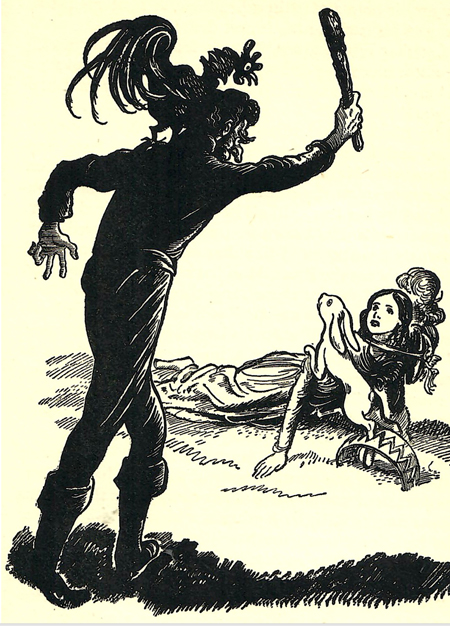 Throughout my academic career, colleagues repeatedly advised me not to study leadership. As a doctoral student, I was
told the leadership terrain belonged to psychologists, quantitative researchers, and positivists. Later, I was
warned that leadership research was intellectually dubious. Another colleague offered a darker warning: leadership
was where the “big dogs” were. If I wandered into their territory, I might get destroyed.
For quite a long time, I listened. But the professionals I studied kept pulling me back. Senior partners described trying to lead people who possessed as much formal power as they did. Leaders complained that their partners simultaneously demanded more direction and resisted being directed.
Conventional leadership theory did not adequately explain what I was seeing. Eventually I discovered the new and developing field of collective leadership research, which provided me with a theoretical framing to study the themes of power, politics, ambiguity, and hidden hierarchies through which, I was discovering, leadership actually gets done in professional organisations.
There was another tension running throughout my career. The closer I became to the professional world I studied, the more I enjoyed engaging with it. I discovered that lawyers, accountants, and consultants were intensely interested in academic research if you could speak their language and connect it to problems that mattered to them.
I began working directly with professional organizations and their leaders. At that time, this created a problem for me. Impact was something “serious” academics tended not to engage in. I worried that enjoying practical engagement might mean I was not a proper scholar.
For a while, I considered leaving academia altogether. But, I eventually realised that the tension itself was part of my academic identity. As I wrote in my diary at the time:
“Straddling the research-practice divide and bringing together the worlds of academia and the professions is not easy, but I understand now that this struggle is a part of who I am as an academic.”
Working closely with professional firms gives me opportunities to apply research I have already completed. But, more importantly, it exposes me to problems and puzzles I might otherwise never see. Those puzzles generate research questions; research gives me different ways of understanding what I am observing; and taking those ideas back into professional organisations challenges and develops my thinking further.
The boundary between research and practice is not somewhere I occasionally cross. It is where most of my work originates.
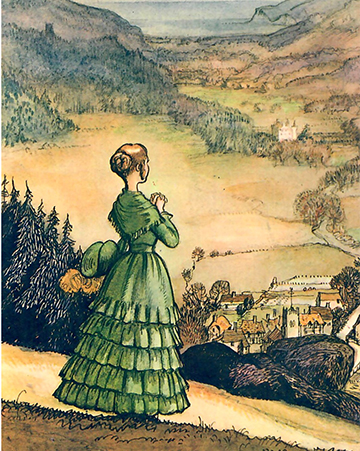 My inaugural ended by looking forwards.
The leaders I study today are dealing with extraordinary levels of uncertainty — geopolitical, organisational, technological, and personal — while often being expected to project confidence and certainty to everyone around them. That has led me towards the questions occupying me now: uncertainty and liminality; the changing nature of collegiality; and the power and politics underpinning collective leadership.
More than 30 years after I began doing research, the lure of the little white horse remains irresistible.
Listen to and edited recording of my inaugural lecture, The elusive fascination: Leadership in professional organizations.
Follow me on Linkedin to be notified of my latest articles, podcasts and research papers as soon as they are published.
Follow